Welcome

Welcome to Chinese Medicine Bristol's official blog! Here, Acupuncture and TCM pracitioner Sandra Arbelaez will share information about Acupuncture and Chinese Herbal Medicine, how they work, and the latest research and developments related to TCM. You will also find knowledge and ideas on how to enjoy a full, healthy life that she has picked up over the course of 15 years of exploring the world of natural health
Showing posts with label Mind-Body-Spirit. Show all posts

Thursday, 16 December 2021

My second trip to Lesvos to offer acupuncture to refugees


After my first trip to Lesvos in August this year, when I saw the huge need for treatment and human care amongst the refugees living on the island, I decided to go back to offer my skills and to use the needles and moxa I had left from the donations made by Balance UK and Phoenix Medical UK. Through a fundraising page, I collected enough money for my flights and my stay, which came from contributions made by friends, colleagues, and even people I have never met, to whom I am very grateful.

I arrived on the island on November 20th to a surprisingly cold and windy morning. I immediately realised I hadn’t packed the right clothes for the trip. I wasn’t expecting it to be hot but I didn’t expect it to be so cold either! I travelled on a weekend to give myself time to rest, prepare, and discuss the appointment schedule for the week with Fabiola, the incredible woman founder and director of my host organisation, Earth Medicine.

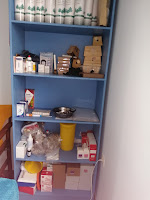
Acupuncture cabinet at Earth Medicine

Earth Medicine had just moved to new premises, a huge house in Mytilene, the island's capital, and it now boasted three different rooms where treatments could be done. In one of the rooms, I found a dedicated acupuncture cabinet where all my needles and moxa equipment had been lovingly placed for my arrival. I was warmly welcomed by people I had met back in August and the first week was already fully booked with treatments. During my stay, there were many people coming to offer a hand, all of them from Germany: a photographer who has been documenting the lives of refugees in Europe for some time, four young women of Afghani and Syrian descent who have started an organisation dedicated to help people from these countries, a young physiotherapist, two homeopaths- one of them I had met in August, and a young woman who was driving the blue van used to transport people from the camp to the clinic and back, including wheelchair users.

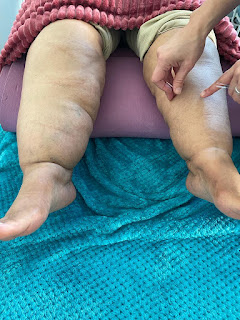
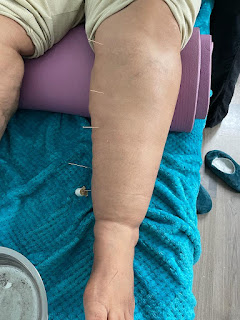
In contrast with my first visit, when we were sweating constantly in the intense heat and people living in the camp were unable to sleep because of this, this time the temperature at night was very low and we had strong winds and stormy weather for many days. This, and the shorter days, had a definite impact on the refugees’ physical and mental wellbeing and made their symptoms even more severe and even more urgent. There were several older women from Syria with the exact same presentation of water accumulation in the whole body that produced severe pain and soreness everywhere, their pain was so intense that they could hardly be touched. There were also men and women in their 40’s and 50’s with dangerously high blood pressure and sugar levels – often occurring simultaneously- that no amount of medication seemed to be able to control. Amongst the refugee population, these conditions are not a result of any dietary excess but purely a consequence of severe trauma and of the high stress and uncertainty that comes with living in a refugee camp. I understood that without treating the stress and trauma already lodged in these bodies, the pain, the sugar levels, and the blood pressure could not be forced to become stable. We saw some – often dramatic- improvements in most of these cases as a result of a multidisciplinary approach which this time involved homeopathy, massage, scalp and body acupuncture, and loads and loads of moxa.

Severe leg swelling- 
Severe leg swelling after a few sessions

The other group that deeply concerned me was the young men in their late teens and 20’s. I only treated seven of them during this trip but I was told that the refugee camp is full of them. These young men, like most people I saw, are highly traumatised by what they have lived and seen in their countries of origin, by the fact that they had to leave everything they knew, by the dangerous and treacherous journeys through different countries, by their experience of being on a crowded dingy for hours not knowing if they would drown – most of the people I have met in Lesvos cannot swim-, and by the fact that no young men are offered asylum even when their families have been granted it. As a result, they feel imprisoned in the refugee camp, unable to return home to more violence and unable to make a life somewhere else without papers. Now, if you have a son, a nephew or have ever known any young men of this age group, I ask you to imagine them in this situation. I have a nephew of this age and I know he is full of dreams, of plans, and hopes for the future and he is eager to not waste any time and impatient to get where he wants to. Young refugees are just the same, only they have no opportunities to do anything with their lives. What they see is their lives is passing them by, their dreams shattered every day, the hopes of being someone and perhaps having a family one day becoming unreachable, they feel useless and futureless, they are depressed, outraged, angry. The young men I treated, were being consumed by all the trauma and the sense of overwhelm. This was burning them from within. All of them – and also some older men I treated- had been increasingly losing their appetite, losing their ability to digest, rapidly losing weight and, as a result, the strength of the bodies was decreasing every day. 


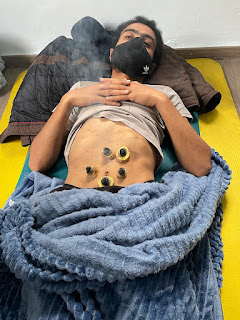
An extremely weak young man
having moxa treatment 
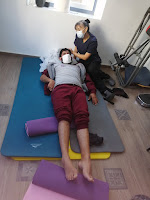
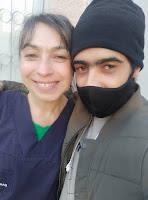
I felt particularly worried for a 22 year old Syrian who had been forced to flee his country after being persecuted by the people who assassinated his father. He had been in Lesvos for nearly two years, and for over a year had been continuously losing weight. He was so weak he didn’t even have the strength to sit up so when I first met him he would come into the clinic and lie down for hours with a blanket over his head. He couldn’t eat much because his stomach was constantly sore, so sore it was extremely painful to touch it. I treated him every day from day one. I could see his body was shutting down and felt sure that at some point in the near future there would be no return. I used very few needles on him: on his body only to encourage his digestive system to work again, and on the scalp for his trauma, depression, and the anger and frustration that were making him implode. I also did moxa on him every single day. After 4 treatments, he started to sit up more, and over the next weeks he gradually looked more present and had more energy to interact with others – which I didn’t see him do to begin with. He was also having a good meal every day offered to him at the Earth Medicine house. By the time I left, he was sitting up all day and said he had no discomfort in his stomach, he was feeling stronger and we both thought he had put on a little weight. He was also cooking evening meals in the camp as well as having lunch with us. Earth Medicine is giving him food vouchers so he can get himself ingredients for his evening meals as those who have been refused asylum cannot buy their own food. I just hope that he will continue to eat and get strong and find something to cling onto so that he has some desire to continue living. I also hope that his appeal will result in an offer of asylum so that he can rebuild his life and help his family.

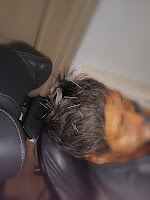
I have found that a certain combination of scalp acupuncture lines can be highly effective to reduce several of the most common PTSD symptoms. I learned these lines from Dr Suzanne Rubidoux and are part of the system developed by Dr Lin Xue Jian for “Psychosomatic disorders”. Most of these are found on the area over the frontal cortex of the brain and have a strong calming and grounding effect that makes someone who is highly wired, unable to settle, very depressed, anxious or even very angry, feel more peaceful, relaxed, and even content. I used these lines on most of the people I treated and they invariable helped promote relaxation, peace, and good sleep. In several cases they also reduced anxiety and depression, reduced the frequency of panic attacks and of angry outbursts. This was of course no antidote to the harsh reality that people are living but I could see how the reduced stress response offers access to other levels of a person system so that we can promote more balance and wellness in the internal body.


Scalp acupuncture used alongside
body acupuncture


I was able to give 187 treatments to 30 people during my three weeks in Lesvos. This is thanks to a team effort of all those who were working with Earth Medicine while I was there- driving people, making appointments, cooking meals for all of us, interpreting for us, and finding out who had friends in the camp who could benefit from treatments-, as well as those who contributed with their donations.

I have had a lot of praise for doing this work, for which I am thankful. However, I feel I have gained a lot from this, maybe even more so than I have given. For a start, I have literally felt my heart expanding, and I have felt more alive and human since my first trip to Lesvos than I have ever felt. It is a wonderful thing to feel connected to other human beings to the point of realising we are all exactly the same, even if this connection is brought on by their deep suffering. Within this connection, every person I have met has transformed into a family member which means I now have a place that is full of my mothers and grandmothers, my brothers and sisters, my children, nephews, and nieces. The success of the Earth Medicine project, with which I am so proud to collaborate, lies in the understanding of our common humanity. Rather than “charity” it offers “community”. A place where we all belong and exchange what we have, where we are just humans interacting with other humans rather than white people with brown people, Christians with Muslims, rich with poor, therapists with sick people.


I have a friend who always says that if something amazing is happening where we are, chances are it is happening in many other places already. I know he is right and I hope that we will all see this grow during our lifetime. My wish is that one day we will all find each other in this new place, where we are all part of the great human family, where we look out for each other, where your pain becomes mine and so does your joy.


With gratitude and love,

Sandra


If you would like to donate to Earth Medicine to support their work in Lesvos, please click here

Thursday, 16 April 2020

Lockdown reflections

Yesterday's sunset


I watched the sunset yesterday, it was glorious: the huge orange sun slowly sinking into the pink horizon. I happened to notice it just at that time in the evening when the world falls silent for a moment. The birds were waiting for the right moment to sing again and we were all suspended in the eternal few seconds of stillness. I felt so comforted by this as I felt that we, for once, are becoming part, even if an unwilling one, of this “giving space” to the universe to perform its wonders. 

I haven’t really been sitting around reflecting on what the current situation we are living means for us. I have just been adapting to it, creating a little routine that helps me use my time productively and go through each day without feeling desperate. Every morning, I meditate to find my centre and not get knocked off by the turmoil around me, and I imagine sending waves of love and light to all my loved ones, and to all the people in the world. I do read the news from around the world every day and allow myself to feel the grief and powerlessness that seem to me the normal response to the daily death count of thousands of people and to the inaction, the lying, and the inadequate response of governments all around. But, knowing myself I know that if I let myself dwell on all the sadness of the situation, I will get consumed by that sadness and will not serve any purpose either for myself or others.

There are moments, like yesterday’s sunset, when we get an insight into reality. Not the reality of us stuck in our homes or of those infected by the virus, but the reality of a Universe infinitely bigger than us, of which we are part and which is always there for us to see when we come out of our minds and of our relentless train of important activities. In moments like those, we can but acknowledge the fact that there are two different dimensions in which we live simultaneously: The Personal and the Universal. 

At the Personal level, we are who we are within our bodies and with our particular set of experiences, thoughts, and emotions. At this level, we focus on our past, present and future, we worry about how this virus and all the circumstances coming with it will affect us. As part of this level we also feel the connection to our tribe, our family, our friends and loved ones, and all the people that we feel we belong with. Our personal level is all about our basic needs, and the safety of ourselves and our tribe. This is the natural expression or our survival instinct and therefore necessary and an intrinsic part of our make-up. However, an excessive focus on the Personal level can make us feel entitled and righteous, and oblivious of the bigger picture. We may go from being able to accept those outside our tribe and having concern for nature and life itself, to feeling entitled to take all we want from nature and seeing “others” as a danger to our safety who may take away our food, our jobs, our security, or the toilet paper that are rightfully ours.

 At the Universal level, we are part of a whole and who we are, what we think, feel and do, has an effect on our larger realm. This is much larger than our tribe, it refers to the whole of humanity, to nature itself, and to all that exists. At this level, my personal experience is less important than what is happening to the whole and I worry more about the impact of my individual actions on the whole than the other way around. When we focus on the Universal level, we try to do things that we regard as positive contributions to the wellbeing of everyone around us, of the whole of humanity, and of nature itself. However, excessive focus on this level, and I have known some examples of this in my life, can make us oblivious of our families and those closest to us, or negligent of our responsibilities towards our bodies or towards our tribes.

Perhaps it is not possible for normal humans like us to be aware of both of these realms at all times, but it is quite urgent for our human family that we increase our awareness of the Universal aspect of our existence. Our excessive focus on the Personal level is at the root of much of our individual suffering and of all that is dysfunctional in our planet. The lack of awareness of the impact that we have – both as individuals and as part of a consumerist society subjected to globalisation- on the whole of humanity and on nature, is causing our own destruction as well as endless suffering to living beings around the world.

If there was ever a right time for an exponential growth on consciousness, it is probably now that we have been forced to stop and listen. Interestingly, as we stop and listen, we are getting delighted by beauty all around us, beauty that we would normally not see or appreciate fully. This beauty is always there, even if we are not looking. Let’s just sit and watch it. Let’s watch it until we feel part of the scene, even just as spectators. Let’s become part of the scene and dare ask how we can collaborate with it rather than try to direct it or change it at our will, which is what we are constantly doing. Let’s dare ask the scariest questions: How can I continue to live in this world without destroying it? How can I collaborate with life instead of hindering it? What does it look like to be a person aware of their impact on the world, on the lives of all humans and all animals, and on the health of my home the Earth? What does it look like and feel like to be a human being with integrity and awareness? Let’s wait for the answers, perhaps we will get them in our dreams, perhaps the neighbour unwittingly will tell us something over the fence and it will be it, perhaps we will turn the computer on and a video will pop up and tells us things, perhaps we will open a book we have never read and it will open our eyes, or perhaps we will wake up one morning understanding what the birds are saying.

I cannot deny that sometimes my hope for humanity wavers, but there is something inside me that tells me that we have in us what it takes to turn this world around and make it become a welcoming and nurturing place for all who live on it. There was a time when our distant ancestors had immeasurable wisdom, they lived in communion with their surroundings, had awareness of their connection to the Universe, had respect for other species, and had reverence and humility at the magnificence of existence; we have many indigenous communities still living on the planet who testify to this. If our ancestors had the capacity to live like this then surely, we must have at least some of it. Let’s take advantage of the time we have been forced to take and, at least for five minutes every day, let’s try to forget the very real fear of the epidemic and the worries that we all have about paying our bills and keeping our jobs; and focus on the bigger us, the “I’m part of this wondrous whole” us, and see what comes out of that.


May we grow into the people who can make the world a better place for ourselves and all who live on it
 In hope and with love,
Sandra


Tuesday, 2 July 2019

My 15th year in practice


I cannot believe it has been 15 years since I started practising acupuncture!! It is such a privilege to be able to say this and to have met all the people I have met, each of whom has taught me something and helped me become a better practitioner in one way or another. I am often asked how I ended up doing what I do, and I always give the short answer. This is the full story of the personal journey that took me to discover all the wonderful things that Chinese medicine has taught me

This journey started many years ago while I was living in London. I was in my mid-twenties experiencing chronic Kidney disease which I had developed as a result of excess stress, excess work, excess exercise, excess alcohol, and not enough nutrition; all mixed in with PTSD (which I never identified at the time) that had resulted from the trauma of being followed by a stalker everywhere I went for a whole three years while I was still living in Colombia. My lack of awareness of my physical and emotional needs was at the base of my health issues, but this was something I was yet to discover.

After a few years of trying unsuccessfully to “get fixed” by the doctor and getting increasingly ill, weak, and scared, I finally decided to try acupuncture which I was convinced, for reasons unknown to me, would help. I had my first acupuncture session one afternoon after yet another kidney infection had hit me. After telling him about my symptoms, the practitioner looked calmly at me and told me I would probably be better off with herbal medicine, which he did not do. I would not take it; I was adamant acupuncture was what I needed and he reluctantly agreed to treat me. I remember him asking questions as if he knew exactly what I was feeling, I couldn’t believe he would ask me about my knees and my ears! Later I learnt how these parts of the body are closely related to the Kidney energy. 

That first treatment was the beginning of a long process, I seemed to be very responsive to it and felt completely different straight after. Although still unwell, I felt lighter and the uncontrollable fearful thinking and the anxiety constantly making my heart flutter and my stomach tighten were all gone for several days. While my physical energy continued to improve steadily for the years I was in treatment for my ailments, my mind and emotions were where the deepest transformation actually happened. I became increasingly aware of my body, my intuition and trust in it got stronger, and my interest in my own health grew to become a fascination with nutrition, herbalism, energy, and natural health. While my body was still too weak to be used in a normal way, I delved into every single library book I found about these subjects and started to apply all the necessary changes that still support my wellness now.  It was at this point that I realised it was not possible to continue living in the way that I have lived until then. Everything had to change, including my career as a classical musician. I was forced to rethink the life plan I had imagined for myself, which was incredibly confusing and made me feel lost for I don’t know how long. I started to do little jobs that my energy levels permitted, and waited for something to happen.


I heard of something called Reiki and became curious about it so I took a course, and then another one to help me get better. After this, I embarked on a massage course. My health had improved a lot and I felt elated to discover the whole new grateful and joyful me who had risen from the distraught and sickened old one. I wanted to give something to others and I loved giving massage to people and feeling the difference it made to their stress and tension. However, I began to encounter more people with deeper issues which could not be solved with massage and I got restless to take the next step. Finally, in 2001, I took courage and decided to learn more about the mysterious therapy that had helped me become aware of how my body worked and which had been at the centre of my return to health. I never looked back. It was the summer of 2004 when I started practising acupuncture, I had both excitement for what was to come and apprehension for my lack of experience but I remember feeling that I was finally on the right track after being forced to change direction in such a tumultuous way.

The day I received my MSc
Like most people’s, my journey into healing was a lonely and, at times, extremely painful one. I guess this was the way it had to be for me to learn what I did, but I came out the other side convinced that it didn’t have to be the same for everyone and wanting to help others on their own journey. Becoming an acupuncturist allowed me to do this. In the last fifteen years, I have tried to be for others that neutral person who can truly listen, and who can help them understand what is happening, reassure them, and make helpful suggestions so that they can feel empowered to heal their whole beings. This, and the constant need to learn more which has kept me studying and trying to deepen my understanding of Chinese medicine, have been my main driving force. In exchange, I get much more than I ever asked for: I get to make a living doing exactly what I feel I am here to do, and I get showered with love and gratitude every single day of my life.


With a neurology professor at Heilongjiang University, China
Volunteering in India with World medicine


with  amazing teacher Dr Suzanne Rubidoux in Dublin
Chinese medicine has taken me to many places in the last 15 years. It took me to Reading for three years to learn Chinese herbs,  to London for one year to do an MSc in Oriental medicine, to China for three months to learn about the amazing work that can be done with neurological conditions, to India to volunteer with World Medicine, and in the last two years to Dublin to be showered with knowledge by one of the most amazing practitioners I have met. I can never imagine getting to a point when I can sit back and think that I have learned everything there is to know about what I do. This is not only encompassing Chinese medicine. I feel that every year in practice I learn more about myself and about being human in these stormy times. This learning, and helping those who suffer, is what life is about for me, and I am grateful to be able to live this experience. I am filled with love and appreciation for all those who have shared different parts of this journey with me, for all those who have offered me their knowledge and wisdom, and for all those who have trusted me and allowed me to be part of their own journeys. All of you are my teachers and I thank you for that. 

With hope to continue growing as a human being and as a practitioner for at least another 15 years. Much love and healing to all,
Sandra

Tuesday, 10 January 2017

TCM causes of disease

According to the philosophy behind Traditional Chinese Medicine (TCM), everything is interconnected and, as a result, one part of the whole can not only influence the whole, but the whole is also reflected in each one of its parts. This law applies to everything that exists. The definition of what constitutes the "whole" varies depending on the context. We could at various times consider the Universe, the solar system, our planet, our specific ecosystem, a species, or a single living being as whole entities. Thus, each of us may be thought of as a "whole" made up of every single part of the body, as well as the mind, emotions, and spirit. In terms of our health, this means that anything that produces changes in any part of us - i.e anything that happens in either our external or internal environments-  can have a definite effect on the whole of our beings and either support our health or cause illness. As a result of this way of thinking, TCM views on how our body works and what may cause disease are radically different to what we are used to and people are often surprised when they come for Chinese medicine treatment for a seemingly simple symptom and end up being questioned about unrelated parts of the body, as well as their relationships, sleep patterns, lifestyle, etc.

Our society is now riddled with highly complex chronic conditions such as diabetes, autoimmune diseases, neurological, mental, and emotional conditions, just to name a common few. Conditions such as these, are not the result of a single agent but are caused by a variety of factors that include our lifestyle, diet, and genetic make up. Nevertheless, we are still stuck trying to find a single cause and a single solution to everything, including disease. Chinese medicine has a unique understanding of the  interconnection between all the systems of the body, between the body, mind and emotions, and of the relationship between us and our environment which enables practitioners to see more clearly how a chronic disease was developed in a particular individual. Thus, the climate we live in, our emotions, our relationships, specific aspects of our lifestyle and diet, and our exposure to pollutants may become important parts of the puzzle of chronic illness.


TCM causes of disease
Traditional Chinese Medicine classifies the causes of disease in this way:
External Causes, which refer to a variety of climatic and environmental factors
Internal Causes, which are specific emotional and mental factors
Miscellaneous Causes, which mostly refer to lifestyle  and infectious and polluting agents


External causes of disease

In this category, we find six climatic and environmental factors that can turn into pathogenic influences as they "invade" the body.  Each of these factors is predominant
Climatic and environmental factors can cause disease
during a specific season although they may also be present at other times of the year depending on the latitude and altitude we live in or because of unusual climatic changes. They can also be created artificially in our heated and air conditioned homes. The six external pathogens or "evils" are listed below:
  • Wind: Predominant in spring, and also produced by fans, airconditioning and drafts, Wind tends to cause a sudden onset of symptoms and affect the upper parts of the body. Wind often combines with other pathogens such as Heat, Cold and Damp, helping them penetrate the body. Sneezing, itching, headaches, twitching, and symptoms that rapidly change location can all be caused by Wind invasion.
  • Cold: Predominant in winter, and also easily contracted diving into cold water, Cold makes the body chilly and produce excessive watery discharges. Symptoms that can result include watery eyes, a runny nose, and frequent copious urination. As cold contracts matter, this pathogen can also cause pain and stiffness in different locations of the body.
  • Damp: Predominant in late summer - a humid season in some parts of China -, Dampness tends to affect the lower parts of the body more than the upper parts and, amongst other things, can cause a sensation of heaviness, aching joints, swellings, thick and sticky discharges, and sluggishness in the digestive system. In the SW of the UK where I live and work, this pathogen is prevalent throughout the year.
  • Heat: Predominant in summer, Heat can cause symptoms such as sensations of heat , fever, dryness in different parts of the body, thirst. inflammation, constipation, sweating, and dry skin.
  • Summerheat:  This pathogenic factor is like Heat but much stronger in its effect, and can also occur in summer. Summerheat can also easily combine with Damp pathogens causing symptoms such as nausea, vomiting, diarrhoea, heaviness and sticky discharges as well as severe fever, sweating, and thirst.
  • Dryness: Predominant in the autumn - although not where I live!-, Dryness can affect bodily fluids resulting in symptoms such as dry eyes, dry nose, dry mouth, dry cough, dry stools, and thirst. This pathogen can easily be caused by different types of heaters and air conditioning systems.

External pathogenic factors invade the body either singly or in combination. They start on the superficial layers of the body where, depending on the strength of the pathogen and of our defensive energy, they may be expelled back out or move inwards causing further symptoms and damage. Symptoms like chills and fever, skin rashes, body aches, sudden swelling of the joints, and headaches can be caused by external invasions.


Internal causes of disease
 In Chinese medicine, it is understood that the body, mind, emotions, and spirit are but different manifestations of Qi. Rather than being separate from each other, these different aspects of ourselves constitute a fluid continuum of energy that goes from the density of the physical body to the lightest, more ethereal Spirit. TCM explains that when Qi, or any of its manifestations, does not flow smoothly or its flow is impaired, this can result in the development of symptoms. It is in this way that an imbalance in our emotions can transfer into a denser form of our Qi and cause physical symptoms. The internal causes of disease consist of seven specific emotions that can turn into pathogenic factors because of our failure to healthily express or otherwise deal with them,  or because of the emotions being so sudden and excessive that we cannot protect ourselves from their effect.


Emotional imbalances are Internal causes of disease
- Suppressed emotions -  for example, unexpressed anger, frustration, or grief - can cause Qi to stagnate. This can in turn cause a myriad of symptoms which may include pain in any part of the body.
- Chronic emotional states - such as constant worry, stress, anxiety, and sadness that are not addressed or resolved- not only disturb our mind and general wellbeing but can also consume our energy which may result in a gradual decline in the functioning of the whole body.
- Sudden, strong emotions - such as fright, trauma, and euphoric or elated states like those artificially caused by chemical substances - can scatter Qi and may interrupt and disrupt its flow to such an extent that it may be hard for it to be restored again. This can result in ongoing mental, emotional and physical disturbances.

The close relationship between each of the seven emotions and a specific organ of the body means that when a particular emotion is out of balance its related organ will be affected first. As all TCM relationships are reciprocal, this also means that when an organ is out of balance its corresponding emotion will be exacerbated. In addition to this, all types of emotional imbalances affect the Heart which, in TCM theory, is the seat of consciousness and of the spirit, and whose energy is involved in any type of emotion we experience.

These are the seven emotions and their corresponding organs:

  • Anger and related emotions such as rage, annoyance, frustration, jealousy, etc; affect the Liver and its functions causing Qi to ascend and go the "wrong way". This can result in a variety of symptoms ranging from headaches and digestive difficulties, to pain and disturbances in the menstrual cycle
  • Joy, as well as elation, euphoria, overexcitement, etc; affect the Heart and may cause the Qi to slow down and scatter around as well as produce excessive heat that can result in sleep disturbances, nightmares, agigation, and an inability to concentrate or relax.
  • Sadness - which includes gloom, despair, etc- affects the energy of the Lungs and tends to deplete the Qi resulting in lack of energy, weakness and weak immunity
  • Grief affects the  Lungs and Heart and has a similar effect on the energy as Sadness, weakening the Qi.
  • Pensiveness, which manifests as overthinking, circular thinking, and worry, affects the Spleen, causing Qi to get knotted and stuck,often resulting in digestive difficulties
  • Fear affects the Kidneys and causes the Qi to descend. This is the reason why in times of extreme fear there may be incontinence of urination or defecation.
  • Fright (shock) also affects the Kidneys, causing Qi to become chaotic. It then may take a long time for Qi to recover its normal course as it happens in some cases of PTSD


Miscelaneous causes of disease
Our constitutional weaknesses, what we eat and how we eat it, the amount and type of exercise that we do, and our exposure to chemicals, pollutants, and to parasitic or infectious agents, can all be factors involved in the development of disease and are classified in TCM as miscelaneous causes of disease.

Having healthy parents greatly contributes to our health
Our constitutional strength is a direct result of the health of our parents at the time they conceived us, and the health of our mothers during pregnancy. When we are born, this constitutional strength is further shaped by the appropriateness of the nourishment we are given as well as the environment we live in. Just as we may end up with a weak or strong immune systems, we may be more or less able to cope with certain activities, foods, or environmental factors. It is common in the West to be oblivious of this. We instead tend to believe in the "once-size-fits-all" approach to lifestyle, exercise, and diet and often unwittingly cause harm to our bodies by doing and eating things that are detrimental to our individual health. Becoming aware of our own constitutional strengths and weaknesses and honouring them by adopting a lifestyle that promotes our wellness is one of the keys to good health and it is something that Chinese medicine is particularly good at because of its deep understanding of how the body works and how it relates to the outside environment. I consider this the most important part of my work as a TCM practitioner as I believe it is not enough to alleviate symptoms but it is also necessary to find ways to prevent their recurrence so that each person has control of their own health.


Although in TCM identifying infectious agents is not important per se, treating infections and intoxication from different types of chemical pollutants is possible through identifying the manifestation of their toxicity in a particular individual and treating them accordingly. Preventing the development of diseases caused by toxicity from infections and chemicals is essential in our modern world where we are subjected to increased pollution and to a chemical overload in our food and many household products, and where our immune systems have been bombarded with antibiotics while we are exposed to increasingly strong infectious agents. Fortunately, it is possible to reduce our exposure to toxins by choosing more natural products and we can also strengthen our immune system through our diet and lifestyle. TCM treatment for this kind of condition consists of aiding the detoxification of the body while strengthening the body's resistance to disease. This is done with a combined strategy that would include diet and lifestyle changes as well as herbal remedies and acupucture.


In contrast with the simplistic view of disease we have in the West, where we think that a complex chronic disease can result from a single cause (sugar- diabetes, cholesterol- heart disease/stroke, chemical imbalance in the brain - depression, and so on); in TCM, disease - particulary when chronic - results from a distorsion or diruption of the equally complex relationships between internal and external factors. As a result, prevention and treatment of disease are processes that involve identifying and addressing the pathogenic factors that have caused the symptoms so that there is relief, as well as harmonising the relationships both between the internal organs and between the individual and the environment so that the symptoms are corrected in the long term.

Monday, 19 October 2015

Autumn lifestyle

Autumn - the beginning of the Yin part of the year
The yearly cycle, like everything else that exists, is an expression of Yin and Yang energies. With the summer over, the cusp of Yang energy is now gone and we enter a calmer, quieter, and more introspective season which is the beginning of the Yin part of the year. Many of us may already be feeling a need for extra rest, and may have even fallen with a change-of-season cold.  These are natural responses to the many changes happening in our environment which are an expression of the sudden inward movement of autumnal energy following the climax of expansion reached during the summer months. 

In the West, we tend to regard the seasons as mere climatic phenomena which can affect the landscape but do not affect us. This is a common misconception rooted in the removal from nature that so many of us experience today: we feel hot in winter and frozen in summer in our air-conditioned spaces, live under artificial lights unaware of day or night, and throughout the year buy all kinds of fruit and vegetables coming from all over the world in the local supermarkets. 

Something that the healthiest people on the planet have in common is not that they purposefully do things because they are considered healthy or eat specific foods because of the omega oil or antioxidant contents, it is that they eat what their particular land produces at each time of the year and observe traditional ways of living and preparing the foods that go in accordance with their environment and needs. In contrast with this, health-minded people in the West tend to go for the consumption of out of season “super foods” and relentless healthy regimes which do not necessarily keep us healthy or enable us to fight disease more efficiently.

Observing the changing needs of our bodies during each season is undoubtedly one of the keys to good health. This involves a fluidity in our habits that allows for seasonal produce to constantly be at the centre of our diets, and for adjusting our levels of activity and rest according to our bodies' requirements.

Autumn in TCM
Generally speaking, autumn is the season of harvesting, gathering, and preparing for the winter months, a time when the lushness of summer ripens up and gives way to falling leaves and fruits.  As we harvest and gather we also find all those fruits that, having gone off, need to be discarded.  This perfectly represents the most important functions of the TCM Lungs and Large intestine, the organs of the metal element whose energy is at its peak during this season.  The Lungs main function consists of gathering air and extracting from it the nourishment – in the form of oxygen – that serves as one of the principal ingredients for the making of Qi which will in turn fill our bodies with strength and vitality. The Lungs and Large intestine are also in charge of the elimination of waste products from respiration –carbon dioxide- and digestion so that they don't stay in the body and cause harm.  The TCM Lung governs Qi and its proper functioning manifests in vitality and constant renewal of our energy. Visit my post on the Lungs to learn more about this organ and how to maintain its health.


Another important function of the metal organs is to protect us from disease, which is an aspect of immunity. Being the most external of organs, the Lungs have the function of projecting outwards a protective energy  - Wei Qi - which is partly derived from the nutrients that we consume and acts as a barrier to invasive external pathogens. The Large intestine is also a main organ in our immune response as is the skin which in TCM is regarded as an extension of the Lungs. They are both in charge of fending off and eliminating harmful substances and waste products so that they don’t enter deeper into the body .  External pathogens most easily enter the body through the respiratory and digestive systems so the strength of the metal organs is considered of great importance.

If the energy of the Lungs is low or its flow impaired by blockage – usually in the form of phlegm and mucus along the respiratory passages – we may be more prone to catching colds, and develop coughs or allergic reactions during this season.

Staying healthy in autumn
In Traditional Chinese medicine texts, autumn is regarded as the season when dryness can injure the body. This is because in mainland China dryness is a prevalent condition at this time of year. Here in SW England however, the opposite is true. Our already humid environment becomes increasingly so, the air can turn soggy while moulds develop on trees and on the falling leaves.  For this reason, some of the Chinese medicine advice for this season needs to be adjusted to our different climate.

Whether we live in a humid or dry area, autumn is always about gathering what we need to be comfortable and well in the winter months, letting go what needs to be discarded so that we are not unduly burdened during winter, and setting up boundaries to protect us from the cold and from harmful external influences. 

Gathering and collecting:
At a physical level, this is represented by the need to prepare ourselves for the winter months when a strong body and immune system can ensure health throughout the cold season. After the more exuberant lifestyle of the summer, autumn calls for resting more and for consuming foods that are denser and richer than those we had in the summer to provide warmth and nourishment to the body.  

At a deeper level, the beauty of autumn leaves, the shortening days, and the chillier evenings invite contemplation and a look in. It is a good time to centre ourselves after the summer holiday and collect our thoughts so that we can start to plan and project into the months ahead.

Letting go:
This refers to an innate ability of the body to identify and discard harmful substances and waste products. This ability can easily get impaired when we either overburden the body with toxicity and/or allow tension and stress to build up inside us until we are literally unable to let anything out. Letting go thus implies a need to allow the body to do its job by helping it cleanse itself through the consumption of healthy food and plenty of fluid, as well as staying physically and mentally relaxed so that we allow things to flow in and out.

We may also need to eliminate certain foods and undergo a cleansing process to get rid of toxicity accumulated through the summer so that our immune system is not burdened and can protect us from illness in the colder months. The Lungs and Large intestine are particularly susceptible to accumulation and this can be very detrimental to their proper functioning. Making sure that we consume a diet that provides good nutrition as well as promoting proper evacuation is of particular importance to prevent disease. In addition, avoiding chemically-laden foods and reducing the consumption of mucus-forming foods such as processed foods, refined sugar, wheat and milk products can help our respiratory and digestive systems remain free of accumulations and blockages. This is more relevant when we live in cold humid climates like the one we have in SW England as environmental dampness and moulds can contribute to this type of accumulation and to the development of respiratory and skin problems.

At a deeper level, just as the lush trees need to lose their fruit and their leaves so that they can concentrate their energies inside themselves, also us need to focus on what goes on inside us. In TCM, grief and sadness are regarded as emotions of the metal element and many of us can indeed experience them more strongly at this time of year. Acknowledging and processing any unresolved emotions is necessary for us to be healthy and happy. Only when we let go of the past we open ourselves to enjoying our present life and plant the seeds of our future. After all, finding inspiration and energy for new projects and growth cannot happen while we are still attached to events, things, and people from the past.

Setting boundaries:
Amongst the TCM Lung functions it is that of providing a boundary between the body and the environment that enables goodness to enter – i.e. Oxygen – and keeps out harmful pathogens. Similar functions are performed by the skin and intestines both of which filter out what is harmful and allow nourishment of different kinds to go further into the body. In order for this protective energy to work optimally, we need to keep ourselves strong and also protect ourselves from harmful environmental influences. Keeping strong in this context is done by consuming nutritious food, accessing clean air, and performing breathing exercises, as well as getting enough rest to avoid over-exhaustion. All of this will ensure that plentiful Qi is made by the body.

A strong Qi however, may not be enough to protect us when pathogens are particularly strong. Because of this, we also need to put up physical barriers against the elements in the form of coats, hats, and scarves, and keep our bodies and environment clean and free of germs.  In TCM, Wind is considered an external pathogen which is the carrier of a 1000 diseases. This pathogen can “invade” the body easily during the autumn particularly through the neck and head, although it can also invade the skin when we are particularly susceptible to it. Wind can be a main factor in many conditions including the common cold, headaches, allergies and rashes.


At emotional and mental levels, the setting of boundaries involves understanding when we are allowing people or situations to override our needs, opinions, and desires. We often wait until we have become stressed, anxious, and even physically ill before we dare acknowledge that a situation or relationship is affecting us in a negative way. Yet it is always down to us to make things better for ourselves as we cannot expect a person or circumstance to go away or change on its own accord. I have experienced this myself and seen countless examples of it in the clinic: in the fear of disappointing others or speaking up, we may push ourselves to the point of making ourselves chronically ill. We then realise that there is no job or person in the world worth our health and that in fact we need to ensure our own wellness before we can be truly reliable, do our best, or look after others. Putting ourselves first and saying no without aggression or guilt are in this case important self-preservation tools born of self-respect rather than selfishness.                                         


Autumn diet
Although there are many diets around which seem to work for at least some people, the one thing that a healthy diet must consist of - for the most part- is natural fresh foods that do not contain any chemical additives, and which preferably are cooked from scratch. All the better if these fresh foods are in season and locally produced as well. Food loses nutrients in time so the further fresh food travels the less nourishing it is. 

If we make at least 50 % of our food fresh vegetables and fruit and ensure that our supply fluids and protein is adequate for our needs, we will be providing ourselves with good nutrition, protection from disease, and constant fuel for our energy. Following TCM views of the digestive process, it is preferable for us to consume cooked warming foods in the colder months. This means that soups and stews are commonly recommended over cold and raw foods. For more on this, have a look at the posts on TCM diet.

To enhance the energy of the Lung we invariably need to increase the energy of the whole body.  Making sure that we eat well and in a way that takes into account our digestive power is essential here as our ability to digest directly relates to our ability to transform food into energy or Qi. This means that for those whose digestive system struggles to process food, eating foods that are easily digested needs to be the focus of their diet so that food can be transformed into energy which will in turn fuel the digestive power itself. My posts on Qi and on the Lungs expand on this and explain how to maintain a strong Qi and healthy Lungs.


For humid areas like SW England, particular recommendations for this time of year are aimed to reducing mucus and phlegm formation as they can easily accumulate in the Lungs, respiratory passages and Large intestine and impair their function. Those with a tendency to congestion anywhere in the respiratory or digestive systems can benefit from avoiding mucus-producing foods such as milk and wheat products and refined sugar. Alcohol, sweeteners, processed and chemically-laden foods, and rich greasy dishes can also produce mucus and are best avoided. Adding small amounts of spices can be a good way to prevent phlegm and mucus from accumulating. Fresh ginger, thyme, and mustard seeds are particularly effective at this and can be added to meals on a daily basis. However, if there are signs of fever, flushing - especially night –, acid reflux or dryness anywhere in the body it is best to avoid these herbs as they are warming and drying.

Keeping the respiratory and digestive tracts free from blockage and accumulation benefits the functioning of these systems and results in enhancing the ability of the body to produce Qi. This can have a direct impact on our energy levels and immune response and can help us stay healthy through the coming winter months.

Saturday, 24 January 2015

The essentials of health

Everyone wants to be in good health. At least we tend to assume so as it would be crazy to wish sickness and unhappiness upon ourselves, wouldn’t it?  Yet, although most of us have some idea of what we need to do in order to be healthy, many of us fail to give ourselves even the minimal care. Worst of all, we seem to wait for sickness to strike before we even start thinking about staying healthy. How come we say we want to be healthy but actively make ourselves sick?

This may be due to a combination of different factors: the ever growing list of activities and responsibilities populating our lives, our own laziness about adopting healthy habits which are often perceived as requiring loads of effort, wanting instant results and quick fixes for everything, and our complacency about the ability of doctors to cure all illnesses. What happens in many cases is that we end up getting forced to adopt healthy habits after a lifetime of mistreating our bodies renders us unable to cope with even the slightliest indiscretion, and our hope of existing cures for everything turns into despondency when we find out that we may have done irreparable damage to our bodies and there is no easy or short term cure for our symptoms.

In addition to this, we have grown increasingly confused about what is healthy and what is not. This is a result of the information overload about these subjects which drives us to keep on trying every new cure-all remedy, supplement, exercise regime, and diet under the sun. This has only contributed to taking us further away from understanding our common needs as members of an animal species and part of the natural world, and our individual needs that result from the fact that we are all born with our own specific constitutional traits. These needs hold the key to our personal health maintenance.


Health = balance
Chinese medicine refers to a state of health as one where there is balance. This balance is understood to be happening between Yin and Yang, the two opposing qualities that lie at the root of everything that exists, making life possible. Where Yin is moist, cool, dark, heavy, and tends to contract and be still; Yang is dry, warm, light, airy, and tends to expand and move. In terms of the body, Yin has more to do with structure and Yang with function. However, as these are not absolute energies but in fact "contain" each other, there is nothing that is purely Yin or purely Yang as illustrated by the Yin Yang symbol.

When we are in a state of balance, the body is strong and all its functions occur naturally and without interruption. This can only happen if there is plentiful nourishment and moisture to provide substance to the organs, body structures, and fluids (Yin); and there is enough warmth, movement, and energy to fuel the activities and functions in the whole body (Yang).

The idea of balance is not exclusive to Chinese medicine. The same concept is referred to in Biology as Homeostasis, which is understood as "the ability or tendency of an organism or cell to maintain internal equilibrium by adjusting its physiological processes". Homoeostasis is chiefly achieved through the nervous and endocrine systems and has an effect on the functioning of every cell. Hormones and other chemicals (Yin) are the most important messengers in this process as they activate and de-activate different functions as the need appears (Yang). This need is informed by a feedback mechanism that constantly checks if different conditions and substances are at an optimum level. When levels are too high or low, a series of actions are triggered by this feedback that will attempt a return to the optimum levels so that ideal conditions are restored. 

Thanks to this process, all our bodily functions and the necessary conditions for life - temperature, blood pressure, pH, glucose concentration, etc – are maintained at a constant level.

Although all mechanisms of the body are involved in the maintenance of health and balance, they will only be achieved if the body’s basic needs are met.  These basic needs constitute what I would call the “essentials of health”, they are the necessary requirements for optimum functioning of the body.  When we do not fulfill any one of these requirements over long periods of time, this may result in the impairment of specific bodily functions which may in turn lead to disease and the development of chronic, often incurable, conditions.

The essentials of health are: Nutrients, fresh air, water, sleep, movement, and relaxation.

Nutrients
Note that I say nutrients, not “food”.  These two words should really be understood as the same thing but in our society not everything that is classified as “food” does actually provide any nutrients.

A nutritious diet is the single most important requirement for our body to perform its functions and for us to be in health, as it will provide us with plentiful Yin (nutrients that become substance of the body) and Yang (physical energy).


Our bodies make over 10 million new cells every second to replace those that have reached the end of their cycle and need to be discarded. The raw material used by the body to make all these cells comes from the food and drink that we consume. So, in order to maintain our health more successfully than we are currently doing, we need to put into our psyche these two equations:  


Nutritious food= healthy cells= good health
Nutrient-poor food (the stuff that has been processed in any way) = unhealthy cells= ill health


It really is that simple.

The lack of understanding of this basic fact is what lies at the root of the epidemic of obesity paired with malnutrition that seems to be spreading around the world.  What we are seeing is that malnutrition does not happen only to people who have no food to eat but can in fact be a result of eating things that are empty of nutritional value.  In effect, the same thing will happen in both types of malnutrition: whole systems of the body will stop working properly, there will be the onset of ill health, lethargy, and exhaustion and, if long term, organs will be damaged beyond repair. The difference is that those malnourished due to starvation will waste away while those who eat nutrient-free processed stuff will instead accumulate toxicity that the body will not be able to discard, resulting in a host of other problems. This is corroborated by an expert report from the World Health Organisation which pointed out that improving nutrition globally is one of the best ways to prevent chronic diseases which are rapidly increasing in the whole world (1).

Chinese medicine theory explains that the body makes Qi (vital energy) and Blood from the food that we consume. Qi and Blood are two of the essential substances of the body as the function of all systems of the body depends on plentiful Qi and the nourishment and lubrication of all cells and tissues depends on a steady supply of Blood. As the quantity and quality of our Qi and Blood depend on the quantity and quality of the nutrients we consume, what we eat is a direct precursor of how well our body works.


To find out about more about food and eating in a way that supports our health, visit my posts on what real food is, the TCM concept of a healthy diet, and the TCM basic substances Qi and Blood 

Fresh Air
The human body can only survive a few minutes without Oxygen as it is the fuel that enables the function of every single cell in the body. Oxygen is not only necessary for cell growth and energy production but it is also part of the basic process of toxin elimination at cellular and systemic levels. 
Fresh air nourishes us

Just as we have grown used to being “under-nourished” by virtue of consuming foods that are high in toxicity but which contain little in the way of nutrition, we have also become habitually under-oxygenated not only because of air pollution but because we have forgotten how to breathe. 


Respiration is so essential for our survival that it is a function that happens automatically. However, if we want to go beyond survival level, counteract the damaging effects of our polluted environment and life-style, and actually feel well and full of energy, we require much more oxygen than this automatic function can provide us with. Accessing fresh air in open spaces will not only help us do this but has countless benefits to our health (2). As well as breathing purer air, we would also benefit from re-learning how to breathe through the practice of breathing exercises. To find out more on this, visit my post on conscious breathing.


In Chinese medicine, air is a necessary ingredient for the making of vital energy or Qi. In the cycle of Qi production, the Lungs extract nourishment from the Air and this nourishment gets combined with that extracted from the food and drink by the digestive system. This results in Zong Qi – chest Qi – which fuels the functioning of the Heart and Lungs and which gets further refinement to become the particular type of Qi that will provide strength to all organs and protect us from disease.

Water
We hear this all the time:  water constitutes more than 60% of the human body. Not only does water make up the largest part of the blood, but it is also necessary for the transport of important chemical messengers and nutrients throughout the body, for excretion of waste products, for temperature regulation, digestion of food, and the lubrication of all bodily tissues. Amongst the many benefits of drinking enough water (3), we can have improved digestion and elimination, healthier looking skin (due to enhanced toxin elimination and increased moisture), and even improved brain function (4).


Although the amount of fluids that we need does vary from one person to the next, we all need to have enough in our diets in order to be healthy. Water is the only fluid the body really needs, we should drink it either as pure water (preferably drunk warm or at room temperature), herbal infusions, and home made fruit/vegetable juices as well as the water contained in fresh fruits and vegetables. Other fluids, like alcohol and soft drinks, can actually fill our systems with toxins and unwanted chemicals or even rob us of water as it is the case with tea, coffee and all caffeinated drinks which promote urination and take water out of the system. 

In Chinese Medicine, water is seen as the main component of Jin Ye (body fluids) which is an essential substance made up of water and nutrients extracted from the food and drink that we consume. Jin Ye have the function to moisten, lubricate, and help cleanse all bodily tissues; as well as being the watery component of Blood.

Sleep
Not enough is ever said about the importance of sleep. However, many of us have experienced how lack of sleep can affect us physically, mentally, and emotionally.

Studies have linked sleep deprivation to low immunity and higher risks of developing diabetes and heart disease (5). More recently, a team of worried scientists from several top universities gave a warning that our societal inclination to ignore our sleep needs is contributing to the development of severe illnesses, including cancer (6).

In terms of Chinese medicine, enough sleep is an absolute necessity to the body. It is during our sleep that the energies of Yin and Blood can grow and nourish the body at the deepest level, toxins and waste products get removed, and the mind and emotions get soothed and settled. Lack of sleep has a direct impact on the Heart and can affect Heart functions including Blood circulation, mental acuity, and emotional balance. It may ring bells to many who have experienced the mental fog, anxiety, impatience, and snappiness that often result after a bad night sleep.

Sleep is particularly important when we have a hectic pace of life as the more we do and the faster we do things, the more Qi and Blood we use up. I often treat people who have gone too long doing too much with too little sleep to compensate for it. What tends to happen in these cases is that we get into “override” and become so wired that even though we feel exhausted, we cannot attain deep restful sleep. This takes us into a downward spiral so that the more tired we get, the less we can sleep, and is a common pathway to the development of chronic health issues. This inability to switch off is regarded in TCM as a reflection of the Yin and Blood of the body becoming extremely depleted.

Movement


Moderate exercise is best
I say movement here because at the word “exercise” our minds often recall pictures of half marathon runners  and fitness enthusiasts with pumped up muscles sweating away at the gym, making many of us feel immediately overwhelmed and put off.  


Although there is no denying that our bodies need movement, the type and amount of exercise that each of us require depends on our individual condition and constitution.This is often disregarded in favour of the belief that the more exercise we do the better we will feel, which results in obsessive running, training, and fitness cultivation which can end up depleting our systems to the point of making us sick. Contrary to this common belief in fact, too much cardiovascular exercise can be detrimental to your health (7). It should stand to reason that if our energy and immunity are depleted and we are struggling to cope with the amount of daily activity that we perform, heavy training sessions are never going to be conducive to health and balance. 

From a balance point of view, the chief reasons behind the idea of regular moderate exercise are:

  • To optimise oxygenation – as we move – especially outdoors- we get more air into our Lungs and this strengthens Lung function and the production of vital energy
  • To enhance the circulation of blood and fluids – movement makes Blood and Qi move more freely increasing oxygenation to every part of the body, aiding the removal of waste products, preventing stagnation of fluids, encouraging digestion, and helping out the Heart so it doesn’t have to work so hard.
  • To settle the mind and emotions – provided we are focusing on the task at hand, exercise can also help busy minds and unstable emotions become calmer.  Gentler types of movement, such as Qigong and Yoga are more powerful at this as they involve deep breathing which in itself has great calming qualities
Relaxation
Relaxation is literally the opposite of tension and is a term used to describe techniques that allow the release of tension at physical, mental, and emotional levels. Such techniques have become a necessity in a society where one in four people experience at least one diagnosable mental health condition (8).

Previous generations never had the concept of relaxation as necessary for health. This may be because they didn’t have the 24 hour, forever-on-the-go existence that we have nowadays. We have grown to regard as normal our being perennially on the move, forever plugged into a phone or device, high on caffeine and sugar, and spending our down time being further stimulated by rapidly moving images, loud noise, and the mental/emotional activity that these stimuli produce within us.

In the same way as sleep deprivation can result in a pattern of feeling exhausted but too wired to sleep, overstimulation of our mind and emotions can make us anxious, depressed, and unable to control the mind and emotions.

There are a many relaxation techniques available these days, the most common ones amongst them are all the different types of meditation, mindfulness, deep breathing exercises, and visualisation. The most important thing is to find something that works for us, allowing us to go into a space in which we become deeply calm. This is the space where our bodies can truly renew themselves and where healing from illness of any kind can be possible.


Becoming aware that we need an adequate amount of good quality nutrients, fresh air, water, sleep, movement, and relaxation is the first step towards a more balanced, healthier life. We can then start to make better choices and learn more about our individual needs. This takes some effort and involves taking responsibility for ourselves and our wellbeing, but ultimately each of us may get to enjoy the consequences of our better lifestyle choices in the form of health and vitality.


References